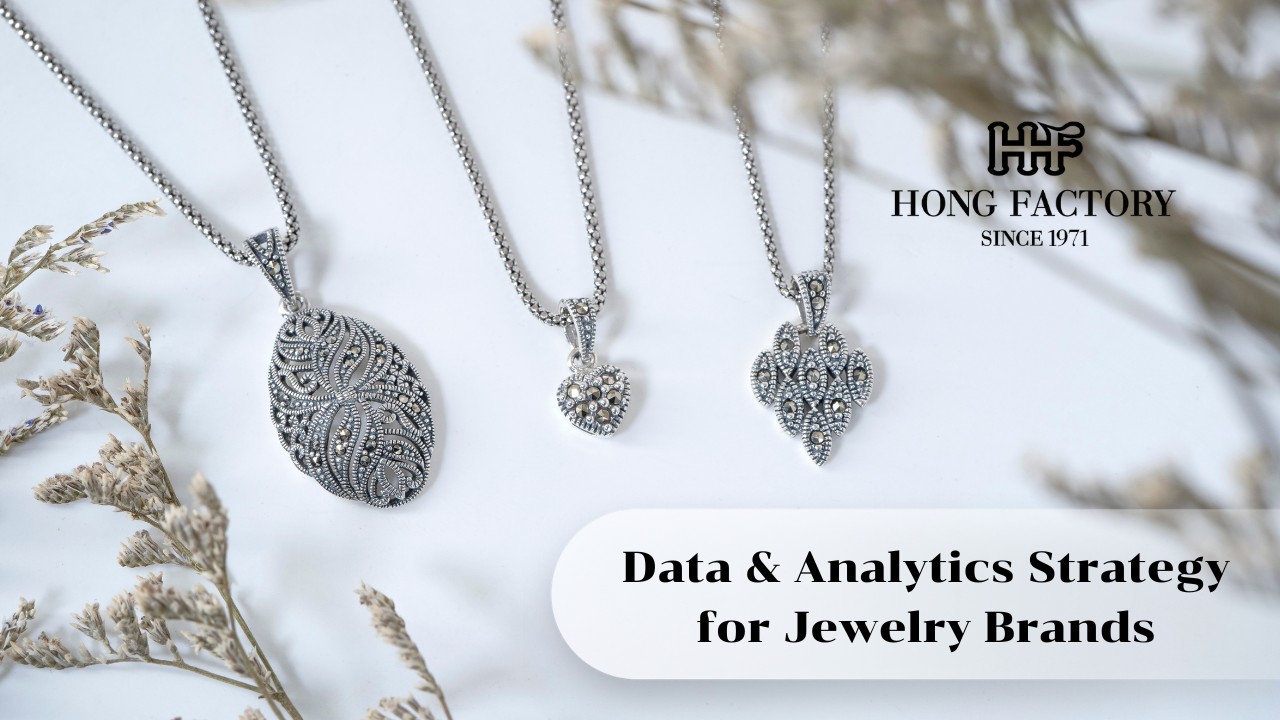
Data and analytics play a crucial role in helping jewelry brands make informed decisions, optimize performance, and scale sustainably. In the marcasite jewelry niche—where product preferences, pricing sensitivity, and trust signals strongly influence buying behavior—a clear data & analytics strategy for jewelry brands enables better understanding of customers, channels, and operations. marcasite stone
This article explains how marcasite jewelry brands can build, use, and scale data and analytics strategies to support marketing, sales, and long-term growth.
Why Data & Analytics Matter for Jewelry Brands

Data reduces guesswork.
Key Benefits of Data & Analytics
- Improved decision-making and forecasting
- Better understanding of customer behavior
- Optimized marketing and conversion performance
- Increased operational efficiency
For jewelry brands, data turns intuition into insight.
Understanding Core Data Sources in Jewelry Brands
Data comes from multiple touchpoints.
Common Jewelry Data Sources
- Website and e-commerce analytics
- Sales and transaction data
- Customer relationship management (CRM) systems
- Marketing and advertising platforms
- Customer feedback and reviews
Combining sources creates a complete picture.
Defining Data & Analytics Objectives
Clear objectives guide analysis.
Common Analytics Goals
- Increase conversion rates
- Improve customer retention and lifetime value
- Optimize product assortment and pricing
- Enhance marketing ROI
Defined goals focus analytics efforts.
Customer Behavior and Purchase Journey Analysis
Understanding customers drives growth.
Customer Analytics Applications
- Browsing and product interaction patterns
- Drop-off points in the purchase funnel
- Repeat purchase behavior
Insights improve user experience and sales.
Product Performance Analytics
Product data informs merchandising.
Product Analytics Metrics
- Best-selling and underperforming items
- Seasonal demand trends
- Return and exchange rates
Data supports smarter inventory decisions.
Marketing and Campaign Analytics
Measurement improves efficiency.
Marketing Analytics Best Practices
- Track channel performance and attribution
- Measure cost per acquisition and ROI
- Analyze content and creative performance
Analytics optimize marketing spend.
Pricing and Promotion Analytics
Pricing data reveals sensitivity.
Pricing Analytics Use Cases
- Price elasticity testing
- Promotion effectiveness analysis
- Margin and profitability tracking
Data-driven pricing protects margins.
Customer Segmentation and Personalization
Segmentation enables relevance.
Segmentation Strategies
- Demographic and geographic segments
- Purchase behavior and frequency
- Engagement and loyalty levels
Segmentation improves personalization.
Analytics for Wholesale and B2B Jewelry
B2B decisions benefit from data.
B2B Analytics Applications
- Partner performance tracking
- Order volume and frequency analysis
- Forecasting demand by account
Data strengthens B2B relationships.
Operational and Supply Chain Analytics
Operations benefit from insight.
Operational Analytics Metrics
- Order fulfillment time
- Inventory turnover rates
- Supplier performance indicators
Analytics improve efficiency and reliability.
Data Visualization and Reporting
Clarity supports action.
Reporting Best Practices
- Dashboards with key performance indicators
- Regular performance reviews
- Actionable insights over raw data
Clear reporting drives alignment.
Data Governance and Accuracy

Trustworthy data is essential.
Data Governance Practices
- Standardized data definitions
- Regular data quality audits
- Secure data access and permissions
Accuracy protects decision quality.
Privacy and Compliance in Data Analytics
Responsible data use builds trust.
Data Privacy Best Practices
- Compliance with privacy regulations
- Transparent data usage policies
- Secure storage and handling of customer data
Ethical data practices protect brand reputation.
Avoiding Common Data & Analytics Mistakes
Mistakes reduce value.
Mistakes to Avoid
- Collecting data without clear objectives
- Relying on vanity metrics
- Ignoring qualitative insights
Focus ensures meaningful analysis.
Aligning Analytics with Business Strategy
Analytics should serve strategy.
Alignment Practices
- Connect KPIs to business goals
- Share insights across teams
- Use data to inform strategic decisions
Alignment maximizes impact.
Scaling Data & Analytics Over Time
Growth requires maturity.
Scaling Strategies
- Invest in analytics tools and infrastructure
- Train teams in data literacy
- Evolve metrics as the business grows
Maturity supports long-term growth.
Long-Term Value of Data & Analytics for Jewelry Brands
Data compounds advantage.
Strategic Benefits
- Stronger competitive positioning
- Faster, more confident decisions
- Sustainable business growth
Data becomes a strategic asset.
Conclusion
A strategic data and analytics approach for jewelry brands enables marcasite jewelry businesses to understand customers, optimize performance, and scale intelligently. By defining clear objectives, integrating multiple data sources, and aligning insights with business strategy, brands can turn data into actionable intelligence. In a competitive and trust-driven industry, analytics is not optional—it is essential for long-term success.